
Lost Your UX/UI Design Job? Here’s What to Do Next
Losing a job is tough, but there is a way to make the best of the situation. While it can be difficult, try not to take it personally and instead focus on preparing for what comes next.
In this article, we'll go through the lessons you can learn from this experience and the steps you can take afterward.
Table Of Contents
First things first
Losing a job can affect more than your daily routine. For many designers, work is closely tied to identity and confidence, so the experience may feel personal even when the decision was driven by business needs.
It can also create immediate financial pressure, especially if you are unsure how long the job search will take. Giving yourself time to process the change can make it easier to handle the practical decisions that follow.
Don't be too hard on yourself for losing your job. It's not something to be ashamed of, and it is a common experience.
Based on your savings and how soon you need a new job, you can use this time to take a break, relax, reflect on your situation, and see things from a fresh angle.
Were you fired or laid off?
Before deciding what to do next, it helps to understand how your employment ended. Being fired and being laid off can feel similar in the moment, but they usually call for a different response.
You were laid off
A layoff generally happens because of changes within the company, such as budget cuts, restructuring, a shift in priorities, or the elimination of a role.
In that case, your first steps should be to review your severance terms, check your eligibility for unemployment benefits, ask for references, and collect any portfolio material you are allowed to keep.
You were fired
Being fired usually relates more directly to performance, conduct, or a mismatch between the employee and the role.
If that was your situation, take time to review the feedback you received and separate useful information from comments that may have been vague, unfair, or poorly communicated.
This reflection can help you decide whether there are skills, working habits, or expectations you want to address before applying for another role.

What to do next
After you take care of the practical details, you should also prepare a brief explanation of what happened.
If you were laid off, describe the business circumstances clearly. If you were fired, be honest without going into unnecessary detail or criticizing your former employer. Explain what you learned and what you have done since then.
Evaluate what you want from your next design job
Although losing your job is difficult, it can also be an opportunity to redirect your focus and look for a role that best matches your passions.
That might mean moving into a closely related field, or it could mean looking for a more specialized role. Either path can be a way to shift your career in a direction that feels like a better fit.
Take some time to look back on your previous job and think about what bothered you while you were there. A retrospective can help you better understand what you're looking for in your next role.
As you reassess your priorities, consider factors such as:
Your work-life balance
Whether you prefer remote, hybrid, or office-based work
The company's size and stage, its culture, management and communication style
Your level of autonomy
Your preferred type of design work
Opportunities for growth
Your salary and benefits
Your work-life balance
Whether you prefer remote, hybrid, or office-based work
The company's size and stage, its culture, management and communication style
Your level of autonomy
Your preferred type of design work
Opportunities for growth
Your salary and benefits
Maintain a productive routine
There are still plenty of things to do even when you are not working. A period without a job can become a time for personal improvement.
You might spend the morning working on job applications and use the rest of the day to educate yourself. This could include learning a new tool or skill, or exploring topics such as soft skills, mindset, and other professional development topics.
Explore
Stepping outside your comfort zone can be beneficial as a creative person. It gives you the opportunity to challenge yourself and try to come up with solutions you might not have considered otherwise.
Free time is a luxury when you have a 9-to-5 job, so make the most of the time you have now by exploring new things or starting personal projects.
Doing so can help you develop transferable skills that may make you even better at your future job. You can also use this time to build a hire-worthy design portfolio.
Our Design Challenges Workbook is a hands-on guide built to help you tackle real challenges and build impressive case studies.
Be proactive
Avoid passively waiting to see what happens next. Instead, take ownership of your future by creating opportunities for yourself.
Try not to let yourself fall into a cycle of desperation. Focus on empowering yourself to choose your own path and decide what you want to do next.
Polish your LinkedIn profile
Take some time to update your LinkedIn profile so it reflects your current experience and the type of role you are looking for.
Update your headline so it clearly communicates your role, specialization, and the value you bring. Rewrite your About section to explain what you do, the problems you solve, and the type of opportunity you are seeking.
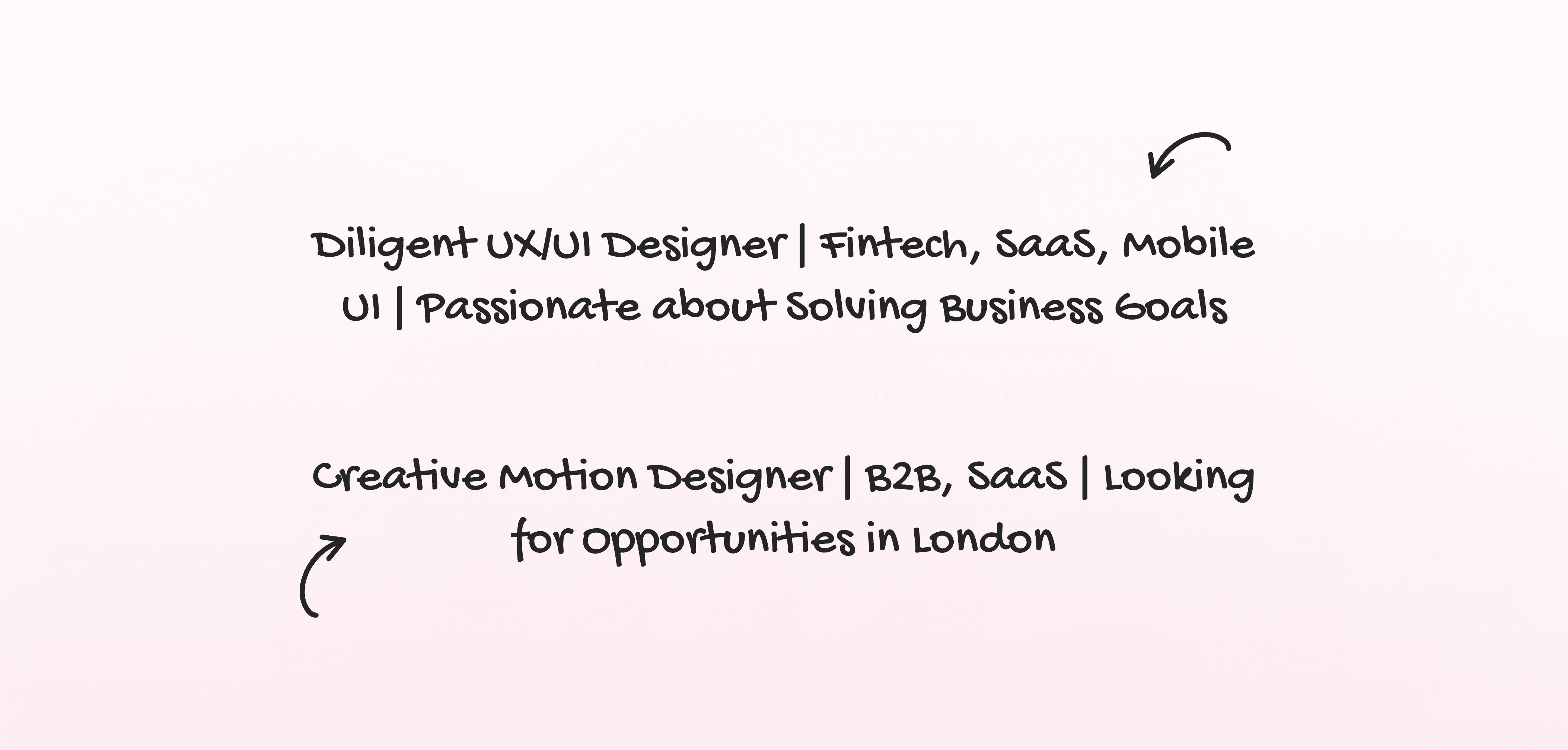
Review your previous experience and add measurable results alongside your specific responsibilities. Make sure your profile photo, banner, contact information, and portfolio link are all up to date.
You can also request a recommendation from former colleagues, managers, or clients, while increasing your visibility by connecting with people in your field.
Improve your design portfolio
Take the time to refine your portfolio so it represents the type of work you want to do.
Remove weaker or outdated projects that no longer reflect the direction you want to take. Lead with your strongest and most relevant work, and make your role, responsibilities, process, and contribution clear in every project.
Make sure your portfolio is easy to navigate and works well on both desktop and mobile. Include enough context to show how you think, not just what the final interface looks like.
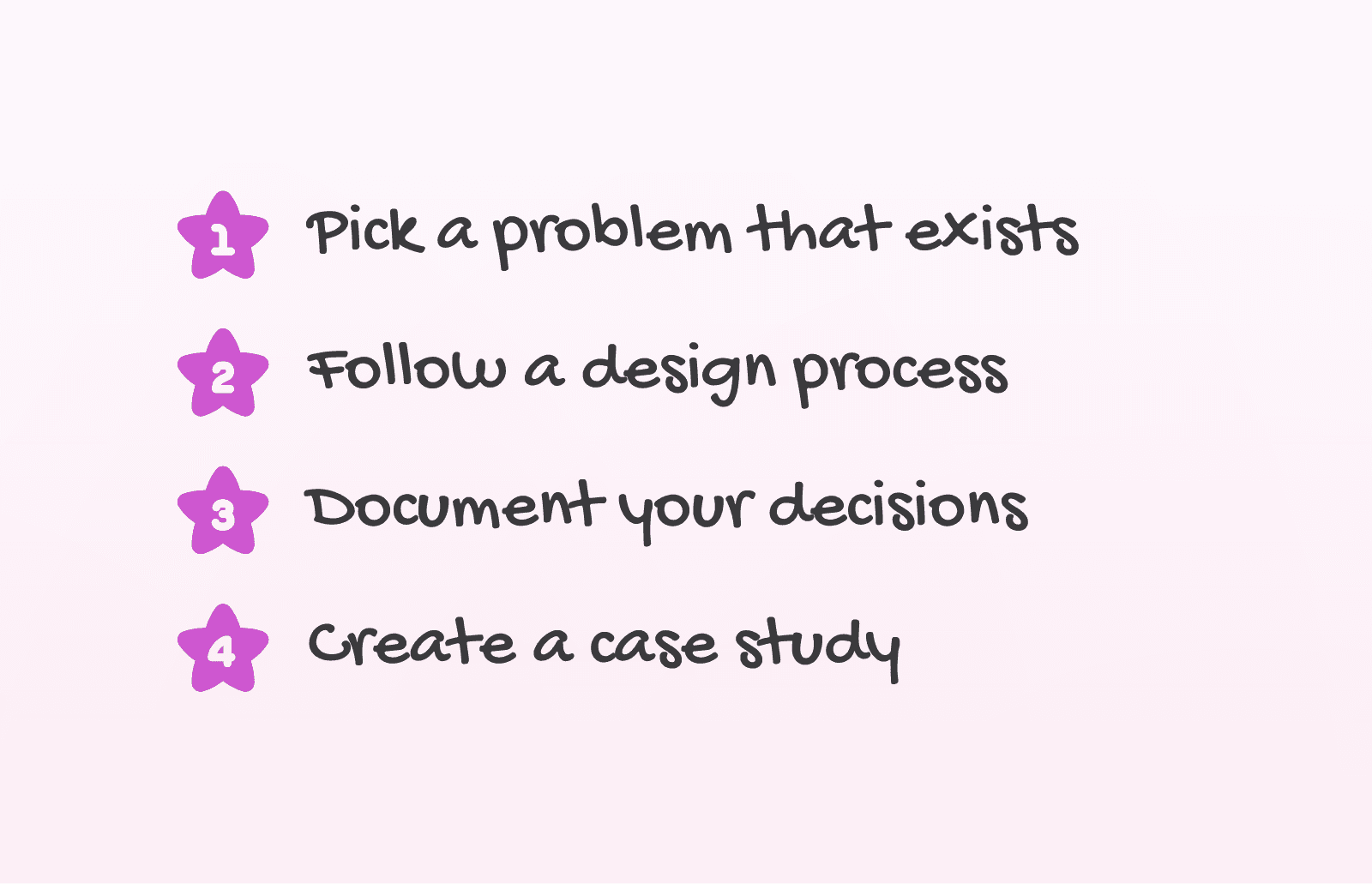
Strengthen your case studies
In product design, case studies are crucial for showcasing a design project's process, decisions, and outcomes. They provide valuable insights into the designer's problem-solving abilities, creative thinking, and overall design approach.
A well-written case study serves as evidence for the effectiveness of design decisions. A coherent and professionally written case study contains the following:
Introduction
Problem statement
Research and discovery
Design process
Implementation
Results
Conclusion
Introduction
Problem statement
Research and discovery
Design process
Implementation
Results
Conclusion
One of the best tips for writing a case study I can provide you with is a bit expected, and that is using a narrative writing style.
With the help of storytelling, you'll take your readers on a journey from the initial challenge to the final solution. But remember to maintain the right balance between storytelling and providing concise content.
And don't forget to personalize it. While templates you can find online provide a useful starting point, it's crucial to personalize and tailor them to your specific project.
Here’s a portfolio case study checklist you can follow to make sure you stand out:
Use recommended structures as a guide, not rule set in stone
Showcase your bias and brand
Don't hide lackluster design process with over-polished mockups
Be honest
Prioritize, simplify reading, and test
Connect the process with the decisions
Use recommended structures as a guide, not rule set in stone
Showcase your bias and brand
Don't hide lackluster design process with over-polished mockups
Be honest
Prioritize, simplify reading, and test
Connect the process with the decisions
If you wish to learn more about the topic, check out our article How to Write a Case Study.
Simplify your design job hunt process
Each and every job application requires time and dedication. All designers have at one point spent too much time planning, writing, designing, editing, pixel-pushing, and customizing their resumes.
Uncertainty about what to include in your job applications, motivational letters, and emails is something familiar to all of us in the design world. You’re not alone!
Applying for design jobs is one of the most daunting experiences I have ever had to go through.
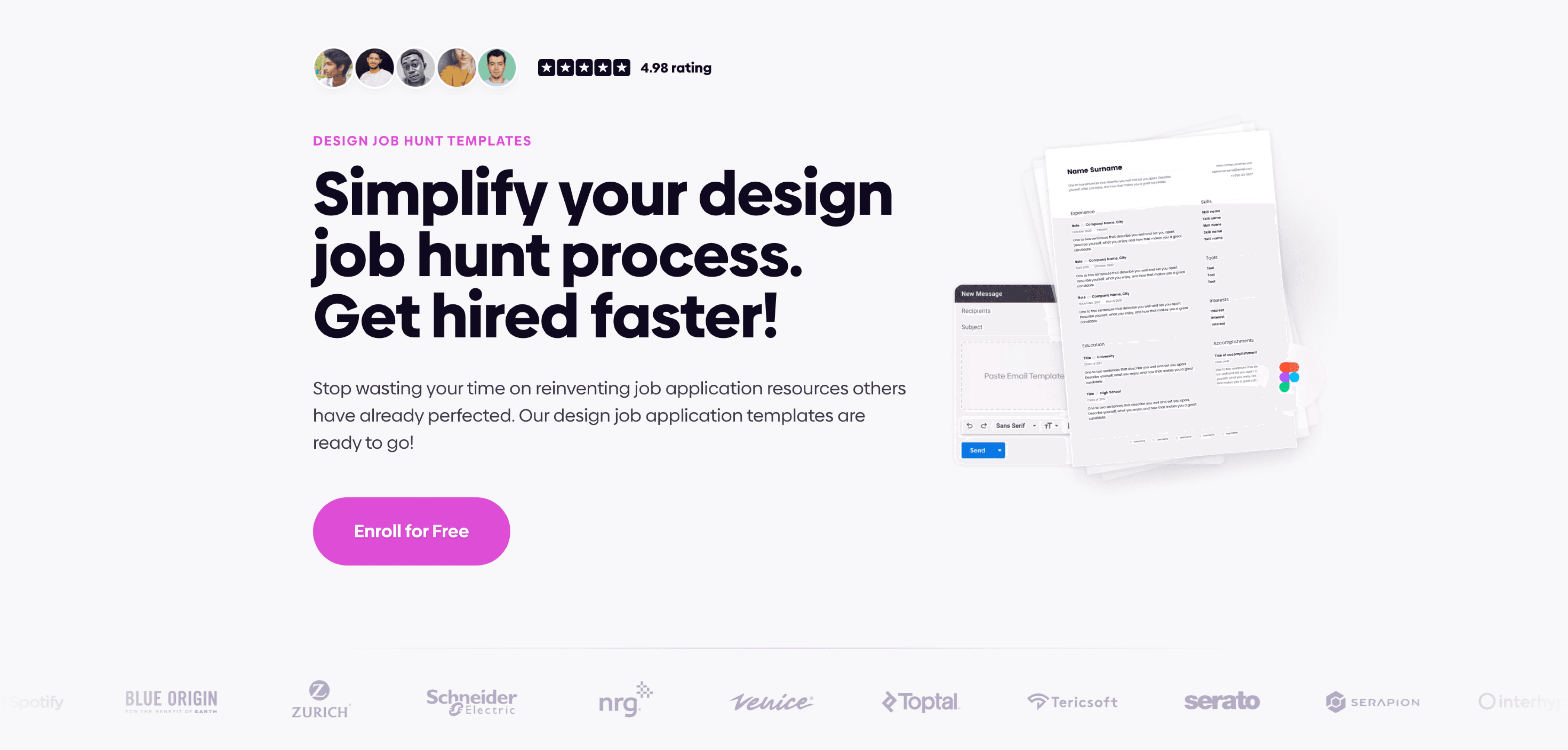
If making your design job applications as seamless as possible sounds appealing, then be sure to download our free Design Job Hunt Templates.
Once you start applying for jobs, you should prepare yourself for the interviews. To help, read our guide: How to prepare for a design interview.

Final words
A job ending does not always come with a clear explanation, and you may not make sense of it straight away.
What matters is that the experience becomes one part of your career rather than the point that defines it. Your next role may come from a clearer understanding of the kind of work, environment, and expectations that suit you better.
We’re thrilled to invite you to join our incredible community of product designers (and enthusiasts) by following us on Instagram. We’re here to support you on your journey to falling in love with product design and advancing your career!
Keep on designing and stay hungry, stay foolish! 🥳
andrija & supercharge design team

We’re thrilled to invite you to join our incredible community of product designers (and enthusiasts) by following us on Instagram. We’re here to support you on your journey to falling in love with product design and advancing your career!
Keep on designing and stay hungry, stay foolish! 🥳
andrija & supercharge design team
Related blog posts
You might like the following



LIMITED-TIME OFFER
Get 12 premium members-only video lessons for free
Just tell us where to send them
You can unsubscribe at any time—no strings attached
LIMITED-TIME OFFER
Get 12 premium members-only video lessons for free
Just tell us where to send them
You can unsubscribe at any time—no strings attached