
What Design School Doesn’t Teach You: 10 Lessons for Your Design Career
Design school taught me how to make things, critique work, present projects, and think like a designer. It gave me the foundation I needed to understand the craft and develop my own way of working.
But some of the most important lessons in a design career are the things design school doesn’t teach you.
What it didn't fully prepare me for was everything surrounding the work. Professional design is as much about people, uncertainty, communication, judgment, resilience, and business as it is about the actual design itself.
A lot of the challenges have very little to do with knowing which tool to use or how polished the final outcome looks. These are some of the lessons I learned once design stopped being an assignment and became a job.
Table Of Contents
Good design work can still die
One of the harder lessons to learn is that a strong design solution is not always enough to get something made.
As a designer, part of the job is building understanding around the work. That means learning how to listen, communicate clearly, influence decisions, and negotiate when different priorities are competing.
Stakeholder support can affect whether a project gets resources, approval, and enough bandwidth to move forward. Even strong UX work can stall if the people involved do not understand the reasoning behind it or do not see enough value in prioritizing it.
That is why communication matters so much in professional design. You are not only responsible for creating a good solution, but also for helping other people understand why it should exist and why it is worth building.
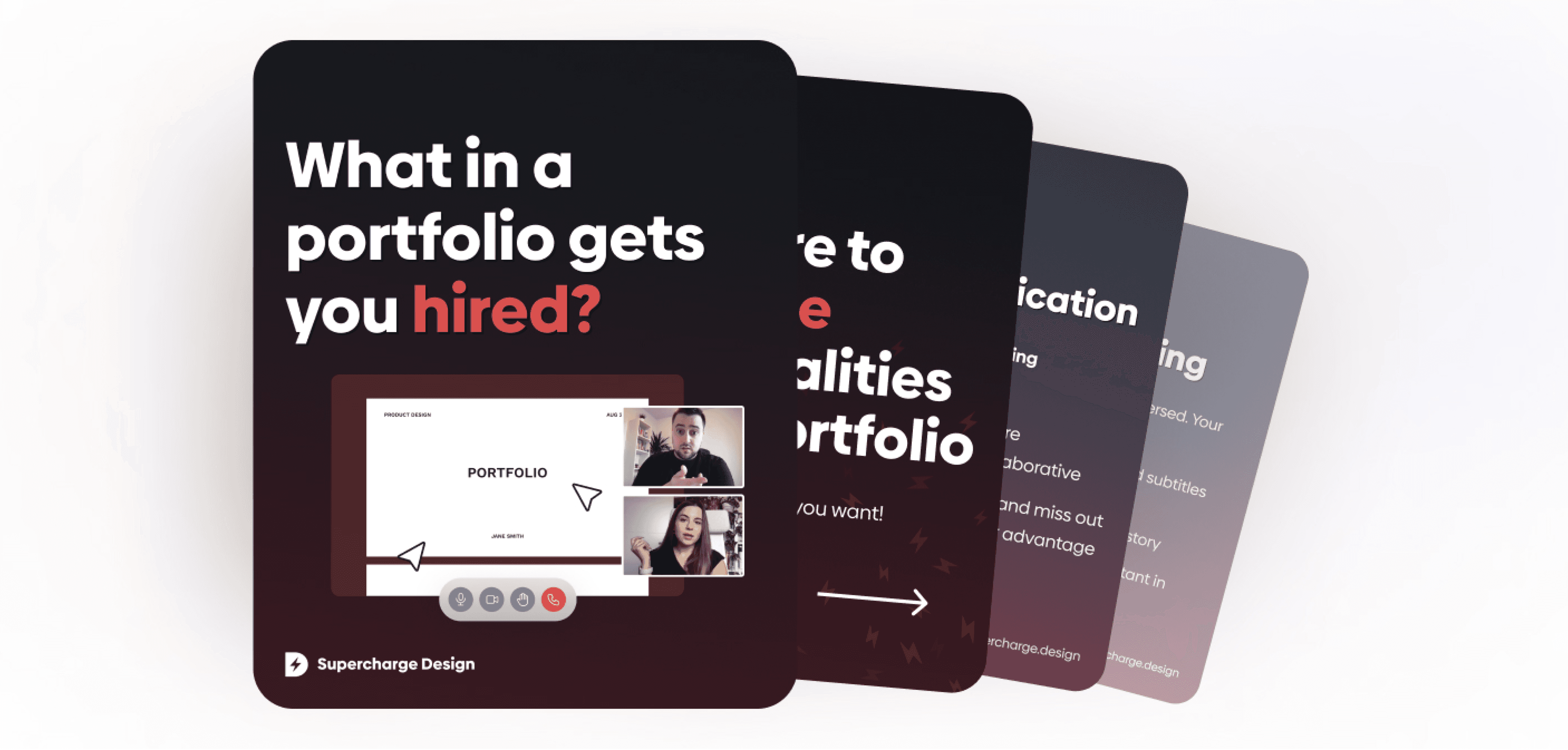
A portfolio is an argument
Design school teaches you how to present projects, but in the industry, a design portfolio needs to do more than show the final work. It needs to demonstrate your judgment.
That means connecting the problem, your reasoning, the process, and the outcome in a way that makes your decisions easy to follow. The strongest case studies do not just show what you made, but why you made certain choices and what evidence supported them.
It is also important to show impact where possible. Whether that means a measurable result, a change in user behavior, or a better business outcome, the portfolio should make it clear what the work achieved.
For collaborative projects, be specific about your role. Explain what you contributed, which decisions you were responsible for, and where the work was shared with the rest of the team.
Critique hurts ego more than talent
One of the biggest shifts in professional design is learning not to treat design feedback as a verdict on your ability.
The faster you can separate your work from your sense of worth, the easier it becomes to improve. Real design work comes with scattered input, different personalities, power dynamics, and competing goals, so feedback is rarely as clean or structured as it was in school.
Part of the job is learning how to identify the useful signal. Some feedback points to a real problem, while some of it is simply personal preference. The important thing is to understand what is actually being questioned and whether it affects the user, the business, or the quality of the solution.
It helps to turn feedback into questions and concrete next steps instead of reacting to it at face value. That makes it easier to decide what needs to change and what does not.
You also need to learn when a decision is worth defending and when it is better to let it go. Not every disagreement needs to become a battle, and knowing the difference is part of developing stronger judgment.


Ambiguity is the real job sometimes
School projects usually come with a brief. The problem is defined, the scope is relatively clear, and there is a structure around what you are expected to deliver.
Professional work is often much messier than that.
You may be working with incomplete information, changing constraints, conflicting input, or a problem that has not been clearly defined yet. In those situations, part of the design work is figuring out what you are actually solving.
That means asking the right questions, understanding the limitations, and helping the team prioritize what matters most. You are not always given a perfect starting point, so being able to create clarity from messy input becomes an important skill.
A lot of the job comes down to synthesis, flexibility, and knowing how to work within constraints without losing sight of the main problem.
Self-doubt is not failure
I left design school technically capable, but psychologically underprepared for how much self-doubt can come with the job.
That feeling can become especially loud when you are surrounded by designers who have more experience, stronger opinions, or a much deeper understanding of the industry. It is easy to start reading every gap in your knowledge as proof that you are not good enough.
Over time, I learned that resilience and confidence are skills too. Self-doubt is common, and it does not automatically mean you are failing.
A big part of growing as a designer is becoming comfortable with asking questions. You are not expected to know everything, and pretending that you do usually slows you down more than admitting when something is unclear.
The important distinction is learning to separate “I don’t know this yet” from “I’m bad at design.” The first one gives you something to work on, and the second one just gets in the way.
Our career is a marathon
Early in your career, every rejection can feel much bigger than it actually is. A failed interview, a project that does not work out, or a job you really wanted can easily feel like a final judgment on your ability. And most of the time, it is not.
You do not need to have the cleanest start or follow a perfectly linear path. Careers develop through a mix of opportunities, mistakes, timing, persistence, and the willingness to keep improving.
What matters more is that you keep refining your work, stay teachable, continue making things, and pay attention to where you need to grow.
Over time, you also start to move beyond the school-level definition of talent. Being good at design is not just about producing polished work, but about judgment, communication, adaptability, and being able to keep learning as the work changes.

Personal work and hobbies still matter
Momentum is rarely handed to you, especially early in your career. Sometimes you just have to create it yourself.
Personal projects can be a good way to build skills, explore ideas, and make your work more visible. They are most useful when they show how you think, though, not just how polished the final mockup looks. The process, decisions, and reasoning behind the work matter just as much.
At the same time, not everything you make has to be optimized for a portfolio, social media, or what you think will perform well online. Making things simply because you are curious can help you stay connected to the part of design that made you interested in it in the first place.
And it is just as important to have interests outside of design. Hobbies, relationships, and time spent doing things that have nothing to do with your career give you perspective and make it easier to avoid turning your entire identity into your work.
Getting paid is a skill you need to build
Understanding invoicing, contracts, taxes, and basic business practices matters more than you might expect when you are starting out.
These things may feel separate from the actual design work, but they directly affect whether you can sustain your career. Knowing how to price your work, set expectations, protect your time, and get paid properly is part of working professionally.
You also need to get comfortable talking about money without apologizing for it. That includes discussing rates, payment terms, revisions, and what is or is not included in the scope.
Scope creep is another thing worth learning to recognize early. Small extra requests can quickly turn into much more work if the boundaries of a project are not clear.
Being good at design and knowing how to run design work professionally are two different skills. Both matter if you want your career to be sustainable.
Talent only gets you so far
Talent matters, but it only gets you so far. Clients and teammates also need to want to work with you.
That means being reliable, respectful, and easy to collaborate with. You should care about the quality of the work, but also care about the people involved in making it.
Meeting deadlines is part of that. And when something is likely to slip, flag it early instead of waiting until the deadline has already passed.
The same goes for feedback and disagreement. Curiosity will usually get you further than defensiveness. Ask questions, understand where the other person is coming from, and focus on solving the problem together.
People remember the quality of the work, but they also remember what it felt like to make it with you.
You will never be “finished” learning design
Graduation is not the point where learning stops. If anything, it is where a different kind of learning begins.
Tools change, industries change, expectations change, and your own taste changes with them. Early in your career, technical skills can open a lot of doors, but over time, judgment becomes more valuable than simply knowing how to use the latest tool.
It also helps to learn outside your immediate discipline. Writing, psychology, business, technology, research, accessibility, and marketing can all make you a stronger designer because they shape how you understand problems and communicate solutions.
The important thing is to stay teachable without feeling like you need to chase every new trend. You do not need to know everything, but you do need to keep learning.
New to product design?
The path into UI/UX and product design can feel overwhelming, especially if you’re just starting out or switching careers.
That’s why we created a free, 2-hour Introduction to Product Design course. It’s designed to remove some of the guesswork and help you understand the bigger picture.
You’ll learn what product design actually involves, the types of digital products you might work on, the core responsibilities of a product designer, and how the role fits into a modern product team.
You can enroll for free if you want a clearer overview of the field before going deeper.
And if you’re looking for a more complete learning path, our All Access subscription includes our full library of UI/UX courses, resources, video lessons, assignments, expert insights, and cheat sheets.
Conclusion
Design school gives you the foundations, but many of the things design school doesn’t teach you only become clear through professional experience.
Over time, the work becomes less about proving that you can design and more about developing judgment. You learn what matters, what does not, when to push for a better solution, when to compromise, and how to bring other people along with you.
You do not need to know all of this when you graduate. And that is exactly the point. A big part of becoming a better designer happens after school, through the work itself.
We’re thrilled to invite you to join our incredible community of product designers (and enthusiasts) by following us on Instagram. We’re here to support you on your journey to falling in love with product design and advancing your career!
Keep on designing and stay hungry, stay foolish! 🥳
andrija & supercharge design team

We’re thrilled to invite you to join our incredible community of product designers (and enthusiasts) by following us on Instagram. We’re here to support you on your journey to falling in love with product design and advancing your career!
Keep on designing and stay hungry, stay foolish! 🥳
andrija & supercharge design team
Related blog posts
You might like the following



LIMITED-TIME OFFER
Get 12 premium members-only video lessons for free
Just tell us where to send them
You can unsubscribe at any time—no strings attached
LIMITED-TIME OFFER
Get 12 premium members-only video lessons for free
Just tell us where to send them
You can unsubscribe at any time—no strings attached