If you think good design is expensive, you should look at the cost of bad design.
Dr. Ralf Speth, former CEO of Jaguar Land Rover

Freelancing can be awesome. You get flexible working hours, location independence, and the opportunity to build a great income if you’re good at what you do.
But here’s the catch: freelancing is still a business. And if you don’t treat it like one, things can get messy fast. Maybe you want more freedom. Maybe you want better projects. Maybe you’re tired of corporate life and ready to build something on your own terms.
Whatever brought you here, freelancing as a product designer can work like a charm when you approach it with structure, clarity, and confidence.
In this article, we’ll explain how to freelance as a product designer, from choosing a niche and setting rates to marketing yourself, finding clients, and avoiding common mistakes.
In the beginning, when you freelance as a product designer, it’s tempting to say yes to every project that comes your way. That’s understandable. When you’re starting out, every opportunity feels important. But over time, being too broad can make it harder for clients to understand why they should choose you.
That’s where niching down comes in. Being niche-oriented means you’re becoming a highly specialized expert. And that can lead to:
Higher client satisfaction
More referrals
Higher pay
Clearer positioning
Better-fit projects
Your niche can be based on the type of work you do, such as UX design, UI design, UX research, and many more.
It can also be based on the industry you serve, such as healthcare, restaurants, and personal branding. Or it can be based on the technology you work with, such as websites, web apps, mobile apps, etc.
The goal is not to box yourself in forever, but to become easy to remember, easy to recommend, and easy to trust.
Before you build your freelance business, you need to know what you actually want from it. Because that's what freelancing is about. It's about designing a work life that fits your goals.
Start with your professional goals. These might include:
Financial goals
Self-improvement
Learning new skills
Building a stronger portfolio
Improving your pricing
Getting better clients
Then list your personal goals. These might include:
Spending more time with family
Building new habits
Traveling
Protecting your free time
Creating a healthier routine
Write them all down clearly. Then look at how you can incorporate those goals into your actual plans.
One of the biggest traps when you freelance as a product designer is becoming a freelancer for more flexibility, then piling on so much work that you lose that flexibility all over again. Your business should support your life. Not swallow it whole.
When you freelance, it’s very easy for work and personal time to blur together. One minute you’re checking a client message. The next thing you know, it’s 10 p.m. and you’re “just quickly fixing that one thing.”
That’s why you need meaningful work routines. They help you stay focused, organized, and sane.
Start by scheduling your actual work time. Decide when you work, when you stop, and when you’re unavailable. You should also track your working hours, even if your client doesn’t require it. That way you'll know how your time is actually spent.
Tracking your hours can help you analyze:
How long different tasks take
Which projects are most demanding
Whether your estimates are realistic
How much admin work you’re doing
Where your time is going
Another helpful habit when you freelance as a product designer is blocking off time in your calendar for upcoming tasks. When tasks are visible in your calendar, they’re easier to manage. And when your calendar reflects reality, your workload becomes much less chaotic.
Working from the couch from time to time is cool. But in the long run, it can become nonproductive and unhealthy. As a freelance product designer, your workplace directly affects your focus, comfort, and efficiency. So don’t be cheap when investing in your equipment.
When you freelance as a product designer, you’ll likely need a setup that includes:
A quality desk
A comfortable chair
A reliable laptop
A good monitor
Tools that help you stay efficient
Tools that help you stay organized
Think of this as an investment in your business. You’re building the environment where your best work happens. And yes, you should plan for these expenses. Freelancing comes with costs, and your workspace is one of the important ones.
In the beginning, when you freelance as a product designer, it’s tempting to say yes to every project that comes your way. That’s understandable. When you’re starting out, every opportunity feels important. But over time, being too broad can make it harder for clients to understand why they should choose you.
That’s where niching down comes in. Being niche-oriented means you’re becoming a highly specialized expert. And that can lead to:
Higher client satisfaction
More referrals
Higher pay
Clearer positioning
Better-fit projects
Your niche can be based on the type of work you do, such as UX design, UI design, UX research, and many more.
It can also be based on the industry you serve, such as healthcare, restaurants, and personal branding. Or it can be based on the technology you work with, such as websites, web apps, mobile apps, etc.
The goal is not to box yourself in forever, but to become easy to remember, easy to recommend, and easy to trust.
Before you build your freelance business, you need to know what you actually want from it. Because that's what freelancing is about. It's about designing a work life that fits your goals.
Start with your professional goals. These might include:
Financial goals
Self-improvement
Learning new skills
Building a stronger portfolio
Improving your pricing
Getting better clients
Then list your personal goals. These might include:
Spending more time with family
Building new habits
Traveling
Protecting your free time
Creating a healthier routine
Write them all down clearly. Then look at how you can incorporate those goals into your actual plans.
One of the biggest traps when you freelance as a product designer is becoming a freelancer for more flexibility, then piling on so much work that you lose that flexibility all over again. Your business should support your life. Not swallow it whole.
When you freelance, it’s very easy for work and personal time to blur together. One minute you’re checking a client message. The next thing you know, it’s 10 p.m. and you’re “just quickly fixing that one thing.”
That’s why you need meaningful work routines. They help you stay focused, organized, and sane.
Start by scheduling your actual work time. Decide when you work, when you stop, and when you’re unavailable. You should also track your working hours, even if your client doesn’t require it. That way you'll know how your time is actually spent.
Tracking your hours can help you analyze:
How long different tasks take
Which projects are most demanding
Whether your estimates are realistic
How much admin work you’re doing
Where your time is going
Another helpful habit when you freelance as a product designer is blocking off time in your calendar for upcoming tasks. When tasks are visible in your calendar, they’re easier to manage. And when your calendar reflects reality, your workload becomes much less chaotic.
Working from the couch from time to time is cool. But in the long run, it can become nonproductive and unhealthy. As a freelance product designer, your workplace directly affects your focus, comfort, and efficiency. So don’t be cheap when investing in your equipment.
When you freelance as a product designer, you’ll likely need a setup that includes:
A quality desk
A comfortable chair
A reliable laptop
A good monitor
Tools that help you stay efficient
Tools that help you stay organized
Think of this as an investment in your business. You’re building the environment where your best work happens. And yes, you should plan for these expenses. Freelancing comes with costs, and your workspace is one of the important ones.

Freelancing is not only design work. There are also emails, proposals, contracts, presentations, onboarding steps, and all those little admin tasks that quietly eat your time. That’s why automation and templates are your best friends.
Start with an elevator pitch you can easily customize. This makes it easier to introduce yourself and explain your value when talking to potential clients.
Then create templates for common materials, such as:
PDF documents
Presentations for potential clients
Common emails
Contracts
Agreements
PDF documents
Presentations for potential clients
Common emails
Contracts
Agreements
Templates make your process faster, smoother, and more consistent. And when repetitive tasks become easier, freelancing becomes much more bearable.
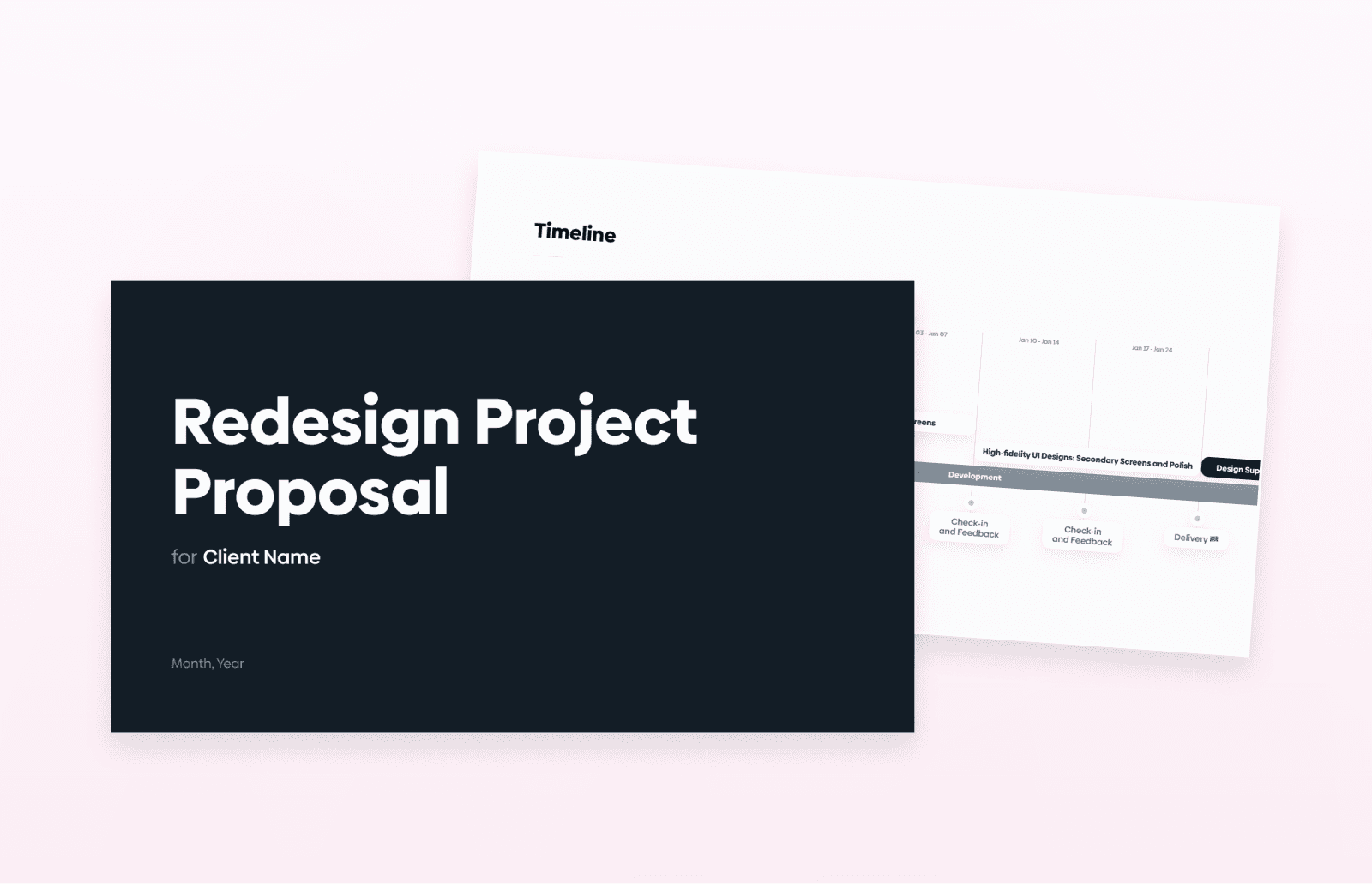
Clear expectations are everything. For your clients, this means being clear about:
Deliverables
Timeline
Number of iterations
Number of revisions
Price
What is included
What is not included
Deliverables
Timeline
Number of iterations
Number of revisions
Price
What is included
What is not included
Clients hate surprises, and honestly, so do freelancers. The more clearly you define things upfront, the less room there is for confusion later. But expectations are not just for clients.

You also need to set expectations for yourself. That includes your:
Yearly plan
Working hours
Financial plans
Budget for expenses
Technology needs
Learning goals
Yearly plan
Working hours
Financial plans
Budget for expenses
Technology needs
Learning goals
When expectations are clear, decisions become easier. You know what you’re working toward, what you can say yes to, and what needs a firm no.
Freelancing as a product designer can be freeing, but being out of corporate life can also feel a bit isolating. You no longer have the same built-in team structure, feedback loops, or shared learning environment. So you need to stay intentional about growth.
Make sure you’re staying updated with industry changes and trends. And don’t only focus on design skills. Working on non-design skills can have a big impact on your work-life satisfaction. That might include communication, sales, client management, confidence, or even business thinking.
Helpful ways to keep improving include:
Attending meetups
Reading books
Signing up for courses
Joining bootcamps
Learning from other freelancers
Improving your people skills
Attending meetups
Reading books
Signing up for courses
Joining bootcamps
Learning from other freelancers
Improving your people skills
The better you get, the more valuable your work becomes. And the more confident you become, the easier it gets to run your freelance business like a real business, which in reality it is.
When you freelance as a product designer, pricing is one of those things you need to think through carefully. And everyone being so secretive about freelancing rates doesn’t really help, but pricing matters.
Your rate can vary depending on a bunch of different things, such as:
The project
The area you’re from
Your experience
Your expenses
The project
The area you’re from
Your experience
Your expenses
When it comes to hourly rates, designers we’ve talked with usually charge anywhere from $25 to $125 per hour. The rates we’ve heard most often are between $35 and $75 per hour for an intermediate designer.
That does not mean your rate has to fit perfectly into that range. It means you should understand your situation, your value, and your business costs before deciding.
If you think good design is expensive, you should look at the cost of bad design.
Dr. Ralf Speth, former CEO of Jaguar Land Rover
If you think good design is expensive, you should look at the cost of bad design.
Dr. Ralf Speth, former CEO of Jaguar Land Rover
There is no perfect answer here. Charging per project or hourly is very situational.
The best pricing model depends on the project, the client, the scope, and how confident you are in estimating the work.
Let’s go through the biggest differences so you can choose what works best.
Charging hourly:
Client takes on the risk (longer project, number of revisions)
You need to log your time
Plan your rate based on your expenses, living cost, and profit you'd like to make
As your skills grow, so should your price; otherwise, the faster you are, the less you'll make, and that is not ideal
Client takes on the risk (longer project, number of revisions)
You need to log your time
Plan your rate based on your expenses, living cost, and profit you'd like to make
As your skills grow, so should your price; otherwise, the faster you are, the less you'll make, and that is not ideal
Charging per project:
You take on the risk of a project taking more than expected
You need to be able to estimate well
Set scope expectations early and list out what's (not) included in the price
Since you're not paid for your time, but the value provided, you are free to charge based on more factors
You take on the risk of a project taking more than expected
You need to be able to estimate well
Set scope expectations early and list out what's (not) included in the price
Since you're not paid for your time, but the value provided, you are free to charge based on more factors
Even if your client doesn’t expect you to track time, you should still do it for yourself when you freelance as a product designer. Keep a detailed record of your time and resources for different projects. This helps you learn how long things really take. And the better your data, the better your estimates become.
Over time, time tracking helps you understand:
Which projects are profitable
Which tasks take longer than expected
How accurate your estimates are
Whether hourly or project pricing makes more sense
How much invisible admin work you’re doing
Which projects are profitable
Which tasks take longer than expected
How accurate your estimates are
Whether hourly or project pricing makes more sense
How much invisible admin work you’re doing
This information is vital. It helps you price better, plan better, and avoid undercharging.
Your pricing strategy should not be frozen forever. As your skills, experience, and business expands, your rates should grow too.
For each project, think about which pricing strategy makes the most sense. That might be:
Retainers
Hourly rates
Fixed project fees
Retainers
Hourly rates
Fixed project fees
Also remember that freelance work includes administrative hours. Besides the design work itself, you’re also doing:
Emails
Invoicing
Sales activities
Marketing
Planning
Client communication
Emails
Invoicing
Sales activities
Marketing
Planning
Client communication
Those hours are part of your business and your pricing should account for them.
This one is important and I can't stress that enough.
Doing one small thing that doesn’t take much time but isn’t part of the deal can quickly become a habit. And suddenly, you’re not running a business, but a charity.
You charge for your time and expertise. So don’t always give it away for free. Never feel guilty about asking to be paid for things outside the original scope.
That said, there is room for judgment.
If it’s a long-lasting client relationship, or if a small additional benefit has the potential to grow the relationship, you can choose to do it. But make it a choice and not a habit.
Marketing yourself while freelancing is one of the most important parts of getting clients. You can be a top-notch designer, but if nobody knows you exist, clients won’t magically appear.
Marketing starts with knowing who you are, what you offer, and why someone should choose you.
Building a brand is impossible without knowing your identity.
Before you create a cohesive brand, answer these questions thoroughly:
What are your values?
What is your mission?
Why you and not others?
What is your specialization?
Who is your ideal customer?
What are your values?
What is your mission?
Why you and not others?
What is your specialization?
Who is your ideal customer?
These answers become the foundation of your brand. They help you communicate with clarity instead of guessing every time you write a post, send a proposal, or update your website.
A strong brand is the way people understand, remember, and describe you. Create a brand sheet and keep it somewhere visible. Include your:
Mission
Vision
Values
Brand attributes
Tone of voice
Ideal client persona
Mission
Vision
Values
Brand attributes
Tone of voice
Ideal client persona
Then refer to it when you’re:
Communicating with clients
Communicating with associates
Creating content
Collaborating
Advertising to your ideal client
Communicating with clients
Communicating with associates
Creating content
Collaborating
Advertising to your ideal client
This keeps your brand consistent and consistency builds recognition.
There needs to be one thing that sets you apart from other designers.
Ask yourself:
Are you extremely quick?
Are you always available for your clients?
Are you awesome at designing e-commerce shops?
Do you have a specific specialization?
Are you extremely quick?
Are you always available for your clients?
Are you awesome at designing e-commerce shops?
Do you have a specific specialization?
Figure out your differentiator, then make it a central part of your branding strategy. When people understand what makes you different, it becomes easier for them to remember and recommend you.
Your work needs a home. Build a website that speaks to your clients and keep it updated.
Use it to show:
Your projects
Client testimonials
Clear calls to action
Ways to contact you
Your projects
Client testimonials
Clear calls to action
Ways to contact you
Your website should make it easy for potential clients to understand what you do and what they should do next.
Social networks can also help you raise awareness of your work.
Use them to continuously publish:
Projects
Testimonials
Updates
Relevant content
Projects
Testimonials
Updates
Relevant content
The goal is to stay visible, because visibility helps people think of you when the right project appears.
Networking matters when you freelance as a product designer. It keeps you on top of people’s minds when they come across projects suitable for you.
Client relationships matter too. Referrals can bring a huge portion of projects with a relatively small effort: simply being nice, professional, and reliable.
Don’t underestimate relationship-building. In freelancing, your network can become one of your strongest growth channels.
Marketing is a skill set. And like design, it gets better with practice. To improve your ability to get clients, work on:
People skills
Sales skills
Lead magnets
Cold outreach
Follow-ups
Learning from the competition
People skills
Sales skills
Lead magnets
Cold outreach
Follow-ups
Learning from the competition
This may feel uncomfortable at first. But with practice, it becomes part of running a healthier freelance business.
Finding clients is one of the biggest freelance challenges. But there are several ways to create opportunities.
You can start with your network. Colleagues might suggest you to new clients, and people outside the industry might suggest you at their companies.
You can also learn how to do cold outreach. This means reaching out to potential clients directly with a clear, relevant message.
Freelance platforms can also help you find work. Some freelancing platforms you can use to find work are:
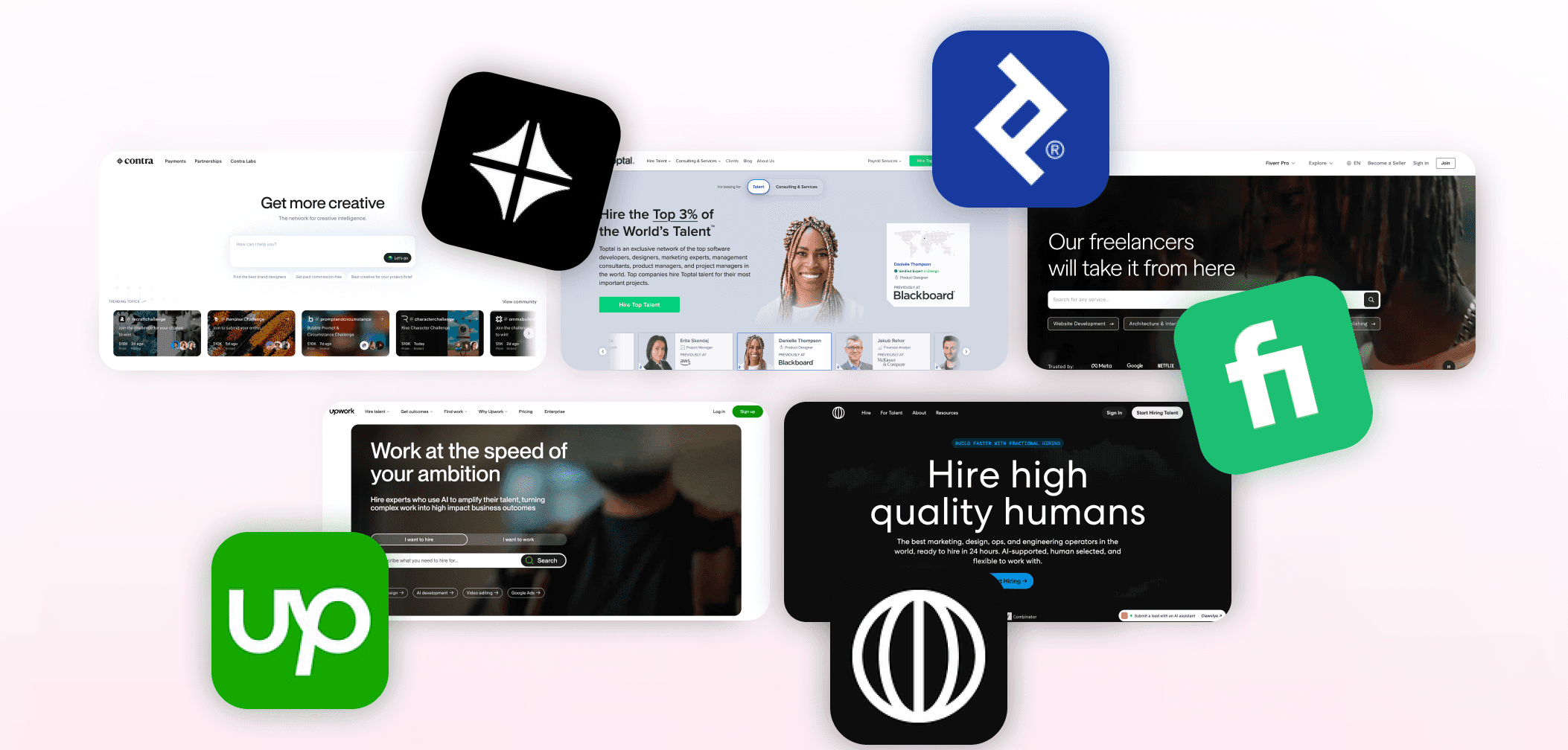
You should also stay on the lookout for work even when you’re fully booked. That doesn’t mean overloading yourself, but keeping your stream alive.
Other useful ways to find clients include:
Building your website
Building your community
Advertising
Staying active on social media
Staying top of mind for potential referrers
Building your website
Building your community
Advertising
Staying active on social media
Staying top of mind for potential referrers
Freelancing is much easier when opportunities are not starting from zero every time.
Not every client is a good client, and not every project is worth taking. Pick work you’re qualified for. Also pick clients that won’t disturb your sanity.
This can be hard in the beginning, especially when a client is willing to pay well. But you should revise your client relationships often.
Don’t fall into the scarcity mindset. There are thousands of clients out there, and there is no need to work on things that don’t suit you.
The wrong project can bring frustration, eat your time, and even cause disputes. A better use of your energy is finding good clients and good projects.
After working with clients, ask for honest feedback. You can use that feedback in two powerful ways.
First, it can become a testimonial that helps you market yourself. Second, it can show you where to improve.
Testimonials are especially useful because they let potential clients hear from people who already worked with you. That builds trust, and trust makes it easier for future clients to say yes.
Freelancing comes with plenty of lessons. Some are exciting. Some are expensive.
Let's go through the big dos and don’ts you should keep in mind.
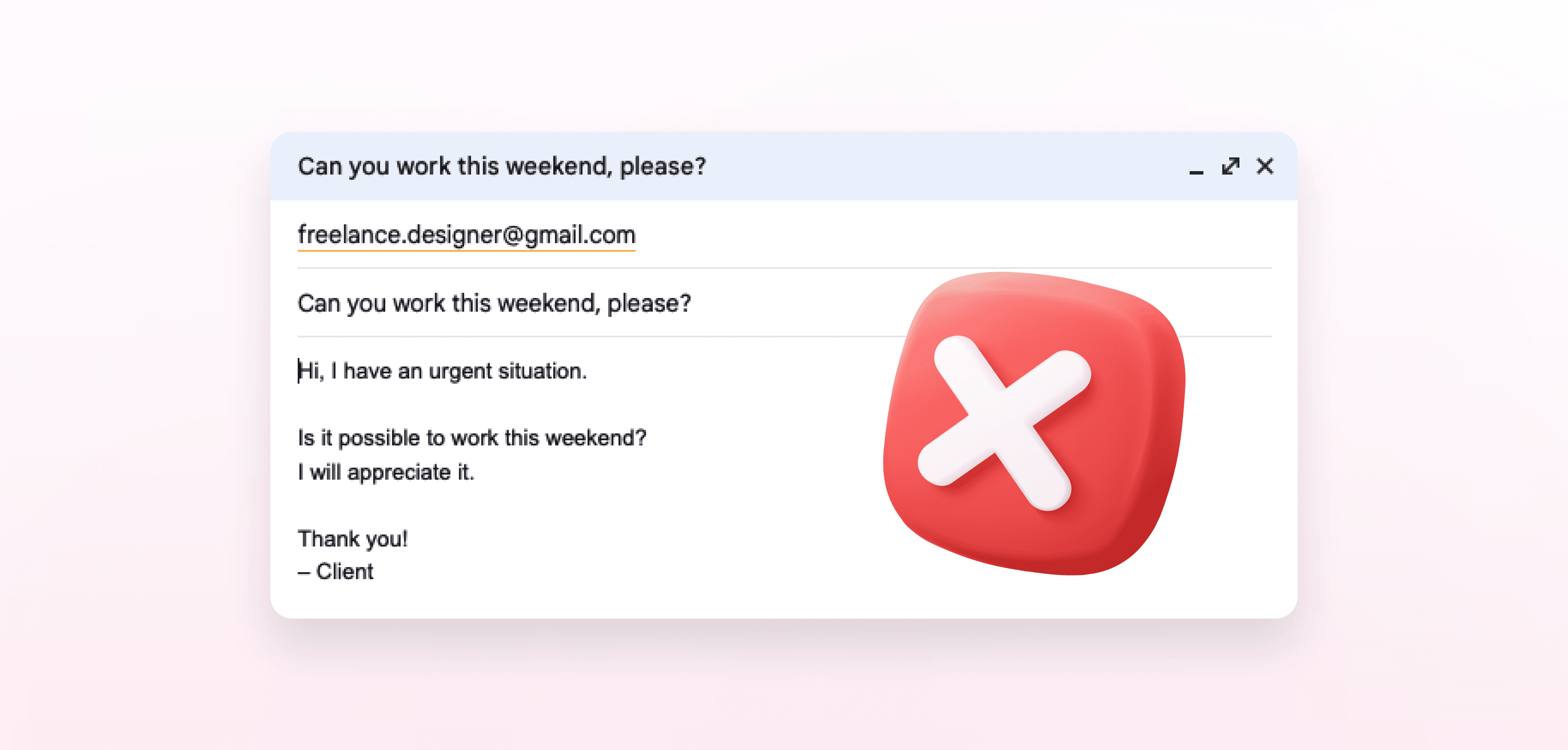
It’s almost impossible to discuss all the details and needs of a client only through email. It can also leave an impression of “hiding,” which can build distrust.
Instead, set up a video meeting. Stay professional, but speak with the client like they’re a teammate. This helps you seem more confident in what you’re doing. Use written communication to support but not replace personal interactions.

Jumping into price too quickly can leave the impression that you’re just trying to take the client’s money instead of giving them a personalized approach.
The best practice is to get a full picture of their problems, present the possible solutions, and ask them how they want to proceed. State the price after they ask for it.

Charging too little can send the message that your work is not valuable. And you may end up being treated that way.
Charge what you deserve. Understand the value of your services. Know your worth, especially if you’ve just started freelancing.
Even if you have a steady income from projects, don’t stop improving. The industry changes fast and new skills make you more valuable.
Invest in your knowledge, tools, and equipment. This helps you provide higher-quality service with less effort. And that can lead to more money.
Stopping your networking and marketing can cause you to hit a dead end sooner than you’d like.
Build your brand and network consistently. Connections and branding are everything in business. Make it a habit to do basic activities like:
Updating your portfolio website
Posting on social media
Sharing projects
Publishing testimonials
Keeping in touch with people
Updating your portfolio website
Posting on social media
Sharing projects
Publishing testimonials
Keeping in touch with people
Small consistent actions can keep you visible.

Learn to say “no”. Trust your instincts and decline projects from clients who don't align with your values.
Saying “no” can save you from wrong-fit projects which can bring frustration, consume your time, and create unnecessary stress. They may even become a cause of disputes.
Instead, aim for good clients and projects. There are plenty of projects where you can make a strong contribution. It’s better to invest time in finding good projects than to work overtime trying to save a bad one.
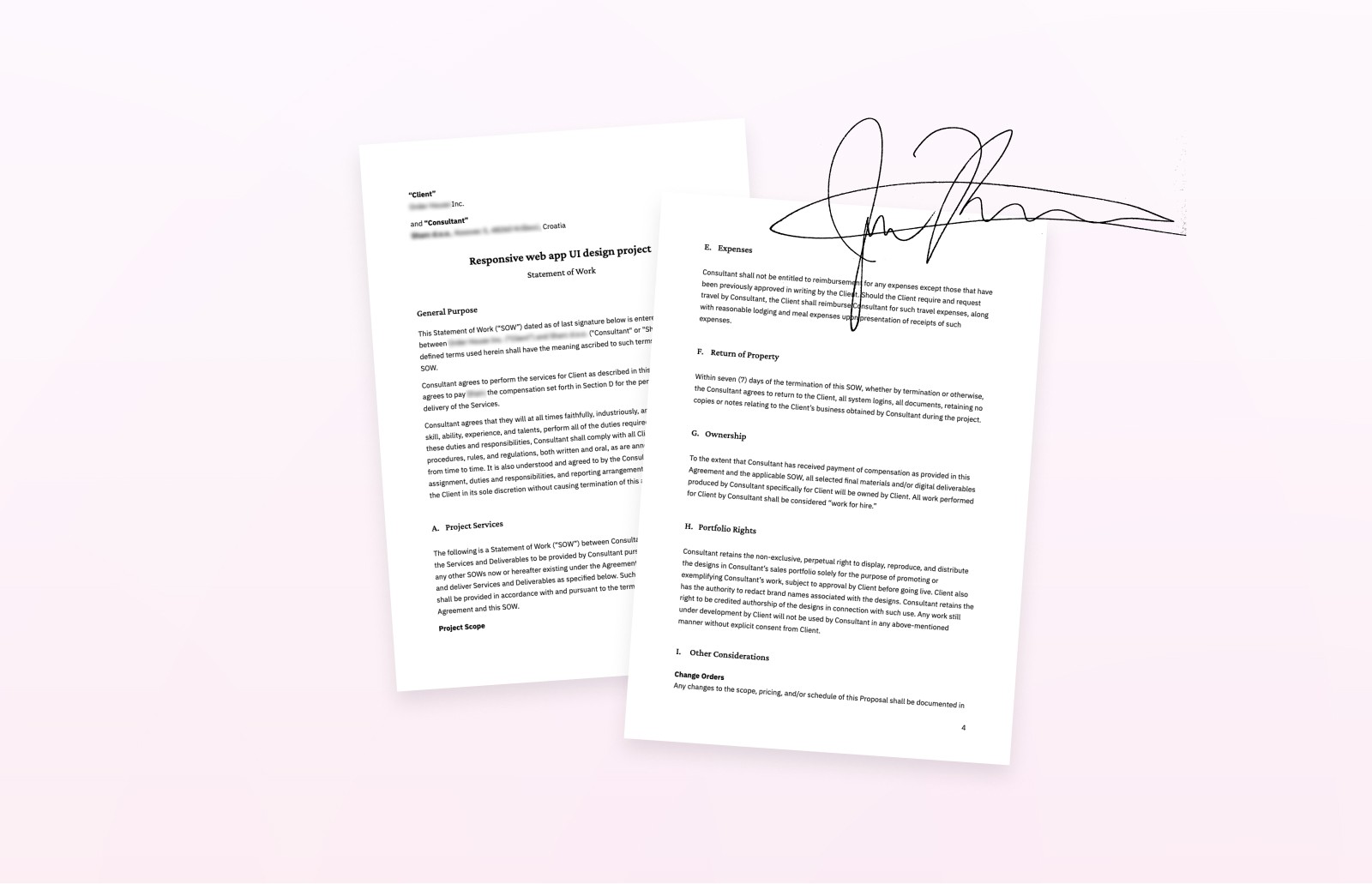
Always confirm project details and pricing in writing, even when it’s just a simple email. Clear documentation helps avoid misunderstandings, keeps expectations aligned, and prevents scope creep by making every agreement easy to reference.
When you freelance as a product designer it can give you freedom, flexibility, and strong income potential. But it works best when you treat it like a business.
That means choosing a niche, setting clear goals, building routines, investing in your workspace, automating repetitive tasks, and setting expectations from the start.
It also means pricing your work properly, marketing yourself consistently, choosing clients carefully, and never feeling guilty for charging for your expertise.
Freelancing is about building a sustainable business around the work you do best. And when you combine strong design skills with clear communication, smart positioning, and healthy boundaries, your freelance career can become much more than “just getting projects.”
It can become a work life that actually works for you.
We’re thrilled to invite you to join our incredible community of product designers (and enthusiasts) by following us on Instagram. We’re here to support you on your journey to falling in love with product design and advancing your career!
Keep on designing and stay hungry, stay foolish! 🥳
andrija & supercharge design team

We’re thrilled to invite you to join our incredible community of product designers (and enthusiasts) by following us on Instagram. We’re here to support you on your journey to falling in love with product design and advancing your career!
Keep on designing and stay hungry, stay foolish! 🥳
andrija & supercharge design team
LIMITED-TIME OFFER
Just tell us where to send them
You can unsubscribe at any time—no strings attached
LIMITED-TIME OFFER
Just tell us where to send them
You can unsubscribe at any time—no strings attached